Blog

Our Process

How Moroccan Ceramics Are Made

Moroccan ceramics are more than decoration — they are the result of earth, water, fire, and skilled hands working in harmony.

For centuries, artisans across Morocco have transformed raw clay into functional works of art. Each piece moves through a careful, deliberate process before reaching your home — a process shaped by heritage, patience, and experience.

Here is how authentic Moroccan ceramic craftsmanship comes to life.

Preparing the Clay

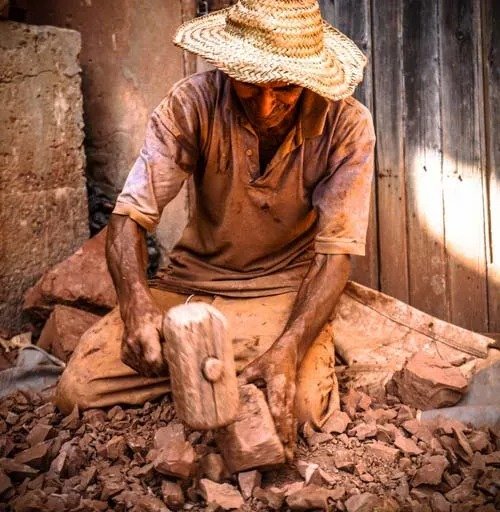
Every piece of Moroccan ceramics begins with natural clay sourced locally.

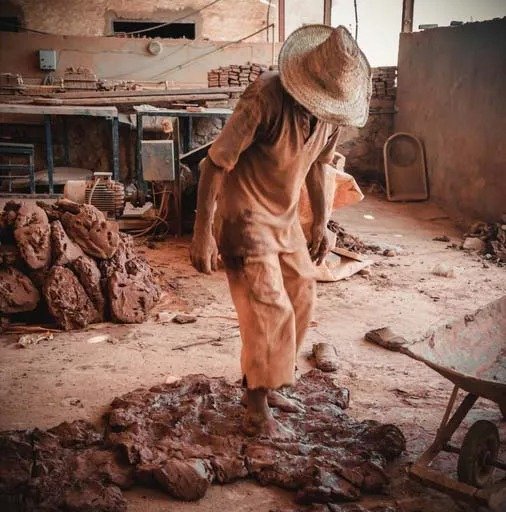
Artisans gather clay from nearby land, maintaining a deep connection between their craft and the environment around them. The clay is soaked in water, filtered to remove impurities, and kneaded until it reaches the perfect consistency.


 

This stage requires sensitivity and experience. The artisan can feel when the clay is ready — smooth, balanced, and workable.

In some workshops today, water used during preparation is carefully reused to reduce waste. It is a small but meaningful step that reflects growing awareness while preserving tradition.

Shaping the Form

Once prepared, the clay is ready to take shape.

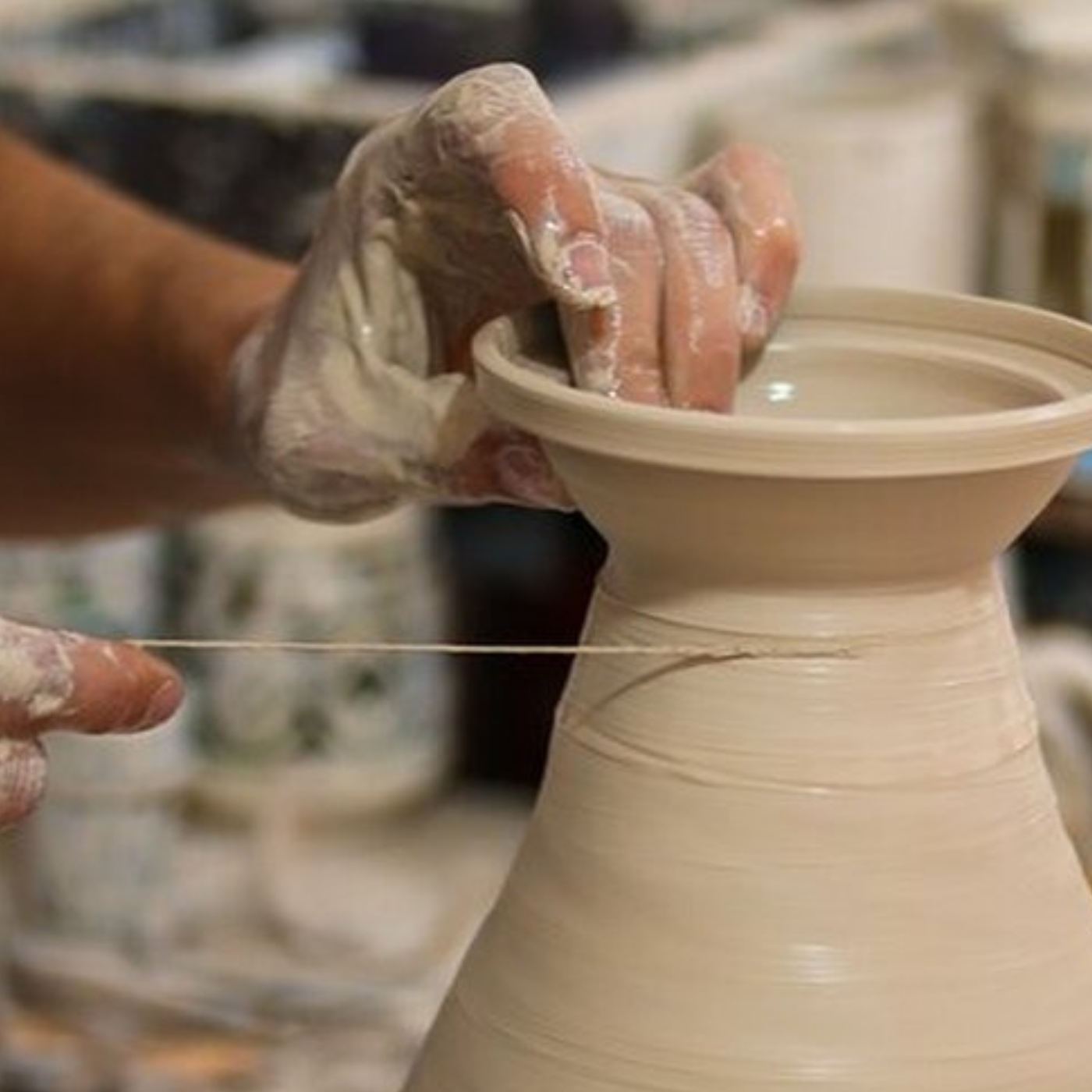
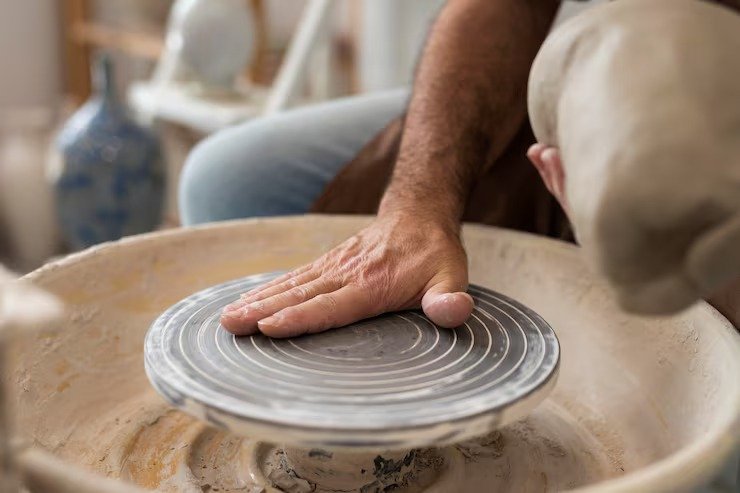
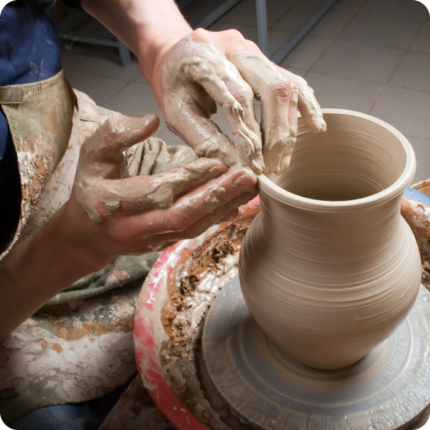
Some Moroccan ceramics are formed entirely by hand. Others are shaped on a spinning potter’s wheel, where skilled hands guide the clay upward into balanced, symmetrical forms.

This moment is where craftsmanship becomes visible. The artisan adjusts pressure carefully, ensuring even thickness and structural strength.

Because each piece is handmade, subtle variations are natural. These small differences are not imperfections — they are proof of authenticity.

Natural Drying

Before firing, Moroccan ceramics must dry completely.

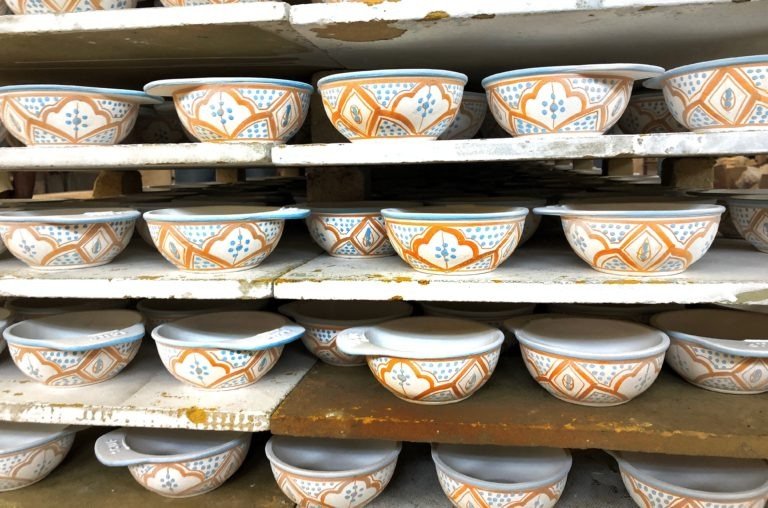
Traditionally, artisans allow pieces to air-dry naturally over several days. This slow process removes moisture gradually, helping prevent cracks and preserving structural integrity.

Natural drying requires no machinery — only time and patience. While faster alternatives exist, many workshops continue to rely on this traditional approach to maintain quality.

Hand Decoration and Glazing

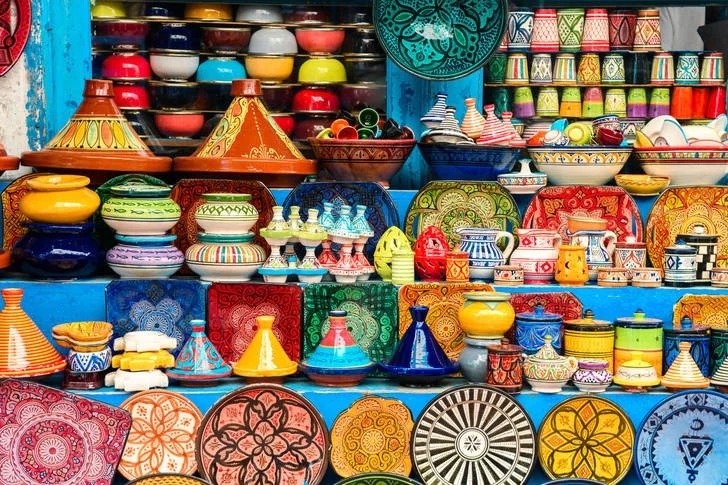
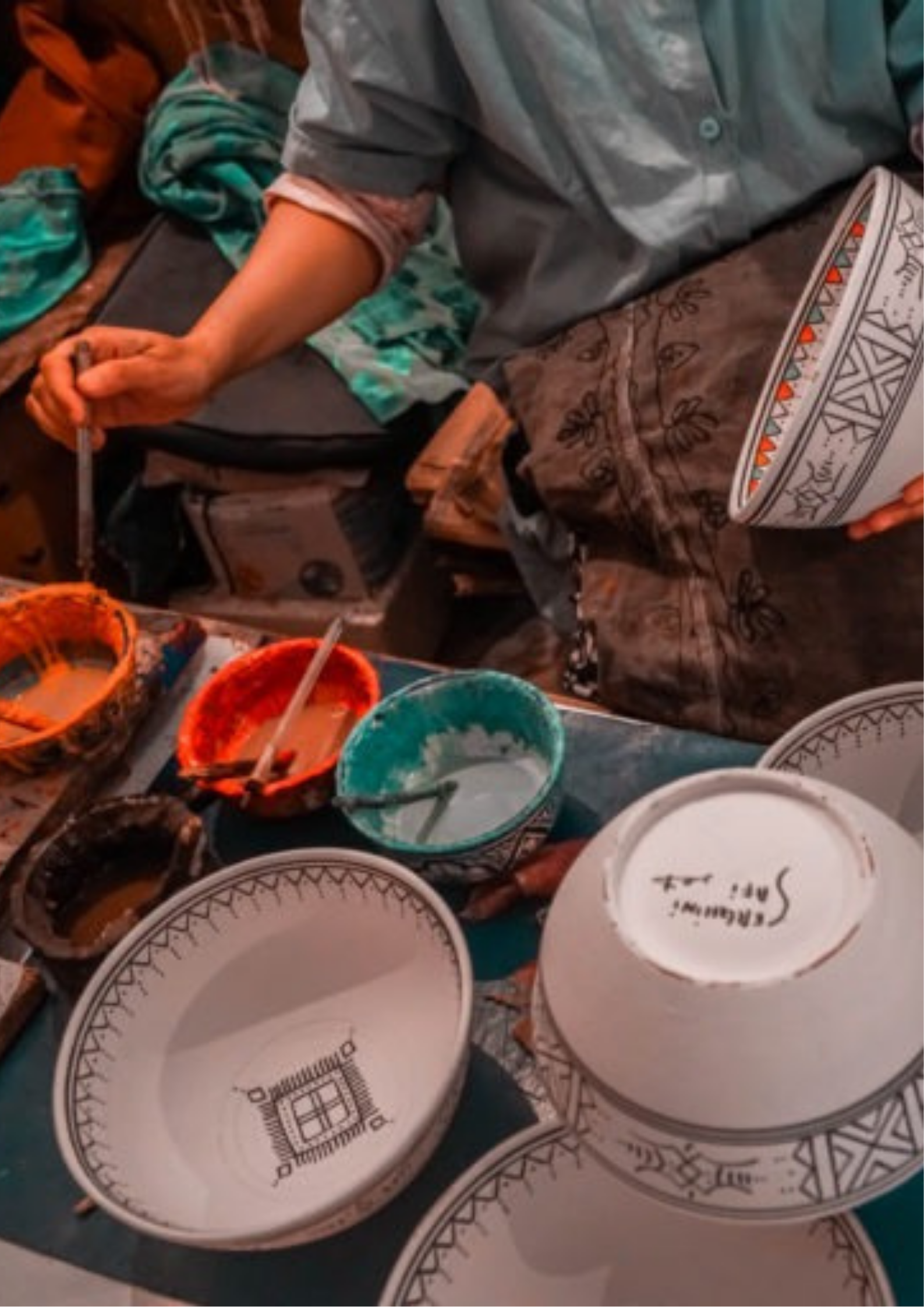
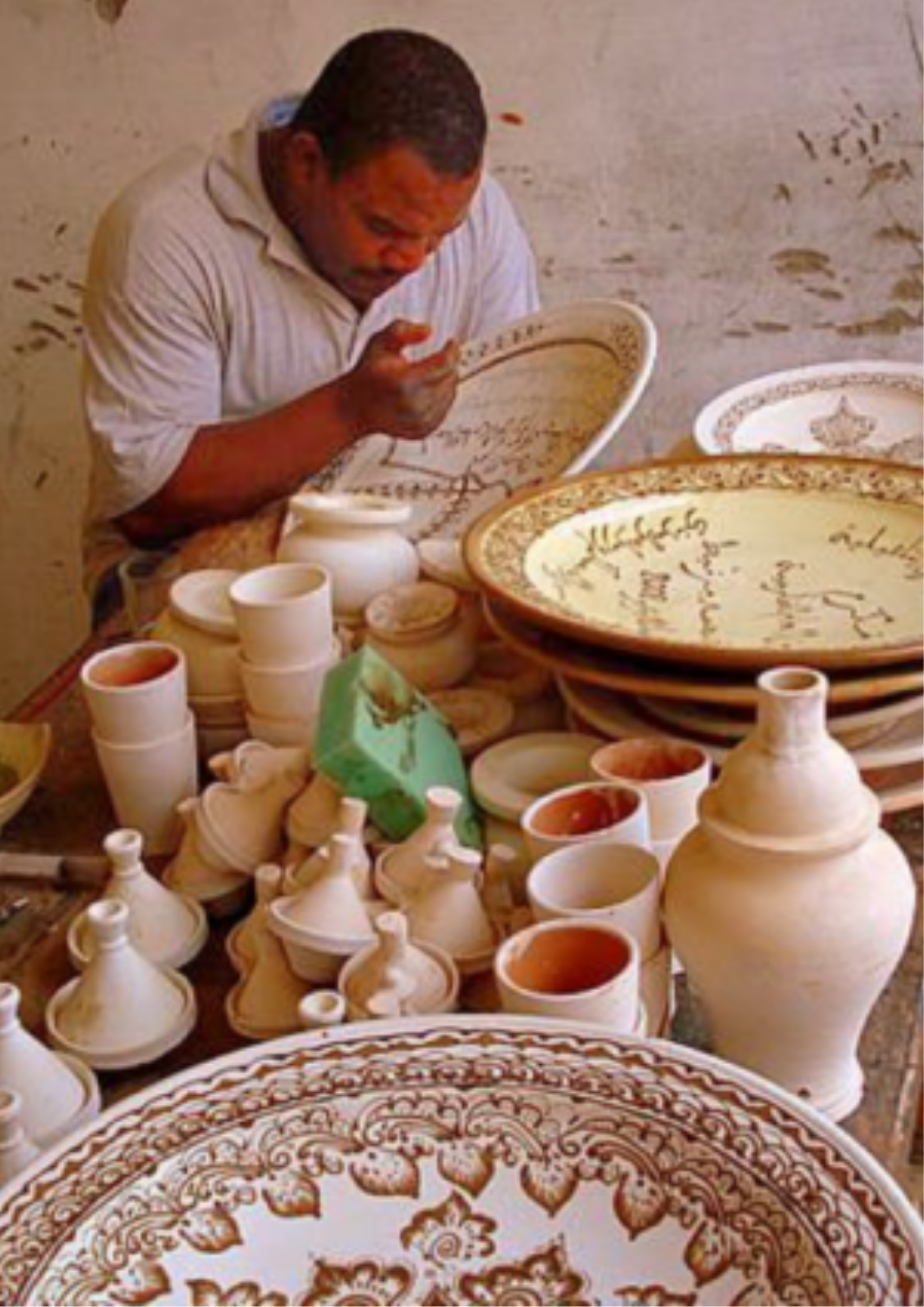
One of the most recognizable features of Moroccan ceramics is their intricate decoration.
Designs often draw inspiration from:

  • Islamic geometric patterns

  • Berber symbolism

  • Regional floral motifs

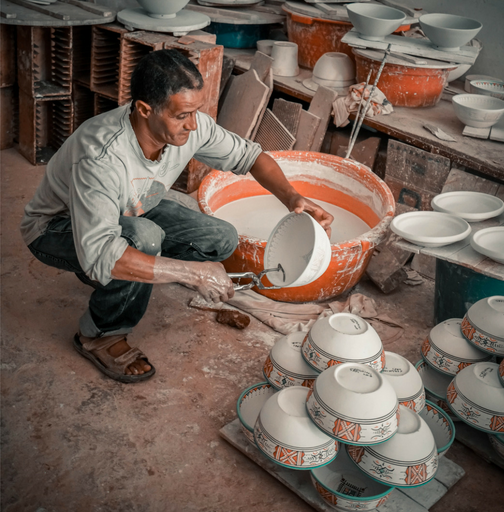
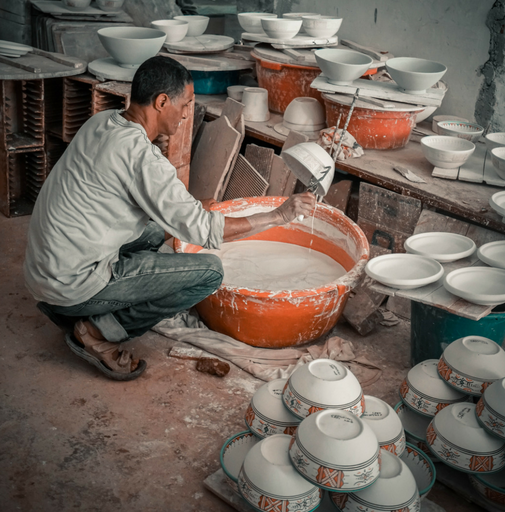
Artisans apply glazes made from mineral-based pigments and carefully chosen materials. Some workshops continue using natural, non-toxic glazes, while others combine traditional aesthetics with modern techniques.

Each brushstroke is intentional. Each layer of glaze adds depth and character.

No two pieces are ever exactly the same.

Firing in the Kiln

The final transformation happens in the kiln.

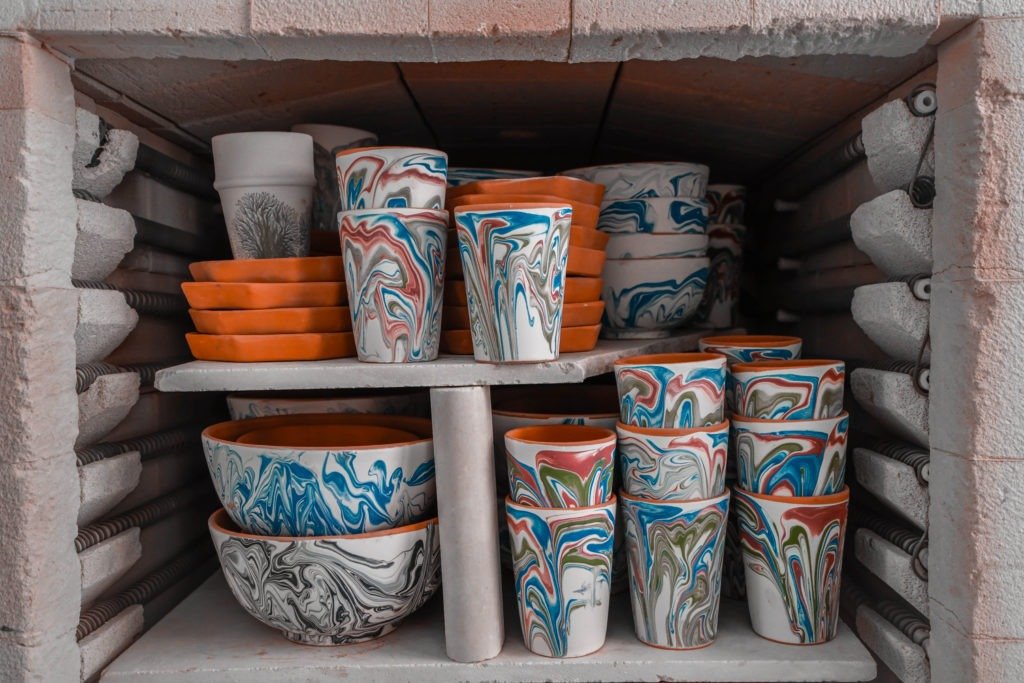
Traditionally, Moroccan ceramics were fired in wood-burning kilns. Today, some artisans are exploring more energy-efficient kiln methods while maintaining the integrity of their craft.

During firing, intense heat permanently hardens the clay and fuses the glaze to the surface. Colors deepen. The ceramic strengthens. The piece becomes complete.

...Moroccan ceramics have always been closely tied to nature — clay from the earth, water for preparation, fire for transformation.

As global interest grows, artisans face the challenge of maintaining authenticity while adapting thoughtfully. Many workshops are exploring ways to improve efficiency, reuse resources, and adopt cleaner energy solutions when possible.

The goal is not to modernize for speed — but to preserve the craft for future generations.